01
Turmoil in the market
Competitors make moves that cause you to question you thinking. Analysts have mutually incompatible ideas on what the future holds. Nothing feels certain.
Our approach is called The Bearing Method. It closes the story gap by creating conviction inside your team first, then building belief with customers, partners, and investors.



You can’t change the market’s beliefs if leaders hold different views about where your business is headed.
Alignment always comes first.
But the kind of deep alignment that equips you to build belief out in the market rarely happens on its own. Here's why.
Your executives are smart. But each brings their own experience, perspective, and read on the market. A room of smart people can look at the same situation and see a dozen viable options.
Leaders don’t wait for answers. Claude and ChatGPT are great for research, but they tend to confirm what we want to believe. When everyone’s opinion is already “validated”, alignment only gets harder.
The natural resolution to having too many choices is to simply make room for all of them. There’s little conflict and few concessions. But a strategy that attempts too much isn’t a strategy at all.
Market shifts create noise. Competitors make unexpected moves, analysts contradict each other, every week brings a new development. It’s never obvious to know what to pay attention to, and what to ignore.
Getting heads to nod is easy. True alignment only happens when you’ve had real conversations. But too often, time and energy get directed to something else: a re-org, a fresh tagline, or another technology initiative.
In navigation, a bearing is the point of reference from which everything else is calculated. If the bearing is wrong, error compounds. If the bearing is right, every decision moves you closer to your destination.
The Bearing Method has four phases. The first two create conviction inside your team. The last two build belief in the market.
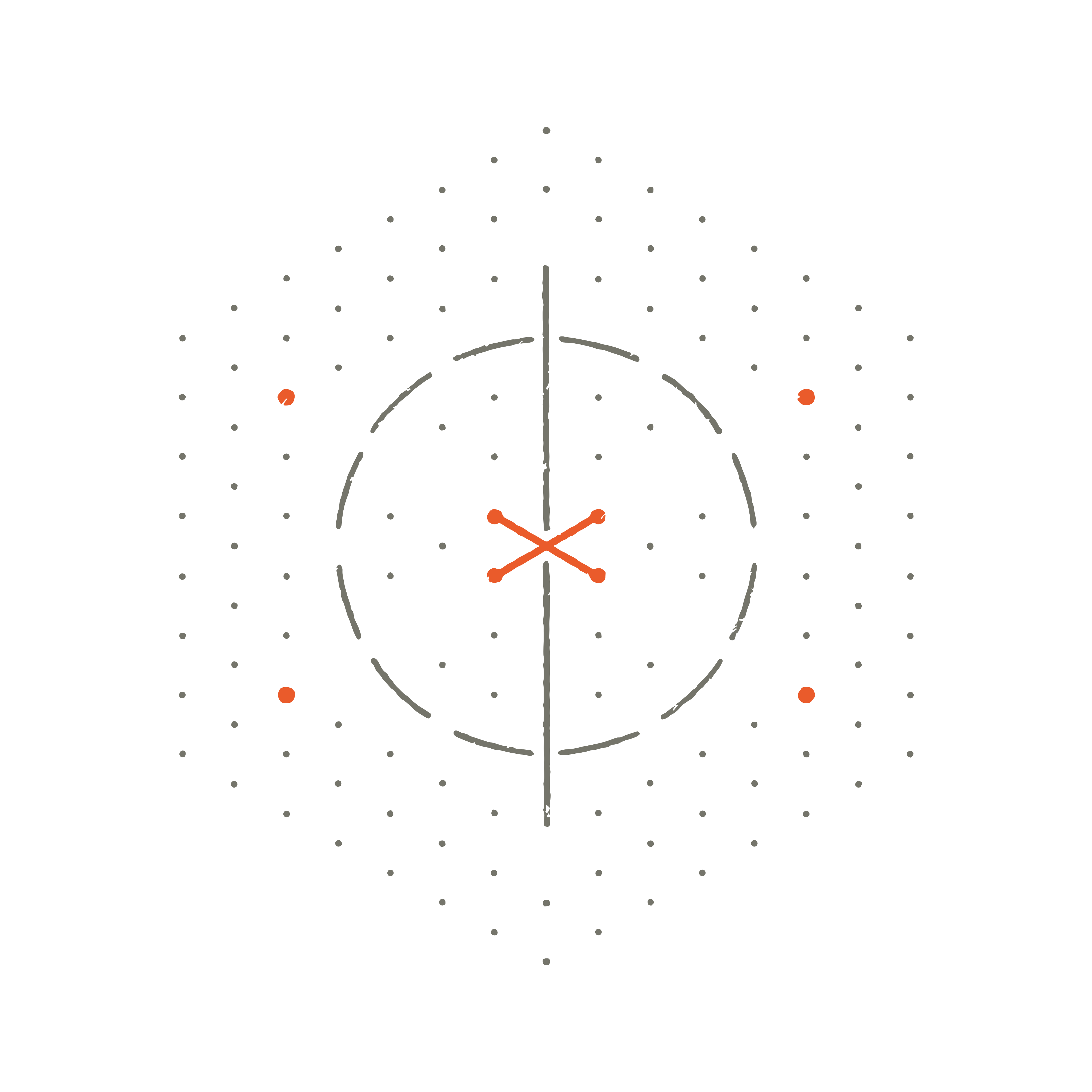
When teams talk past each other, it’s because they hold different maps.
This is where we start.
Together we build a shared picture of your category, your competition, and the strategic moves you can make. Finally, you can see your situation for what it really is. Everyone has the same understanding of what territory to defend. And what frontiers to explore.
Outcome: Every leader in the room holds the same map.
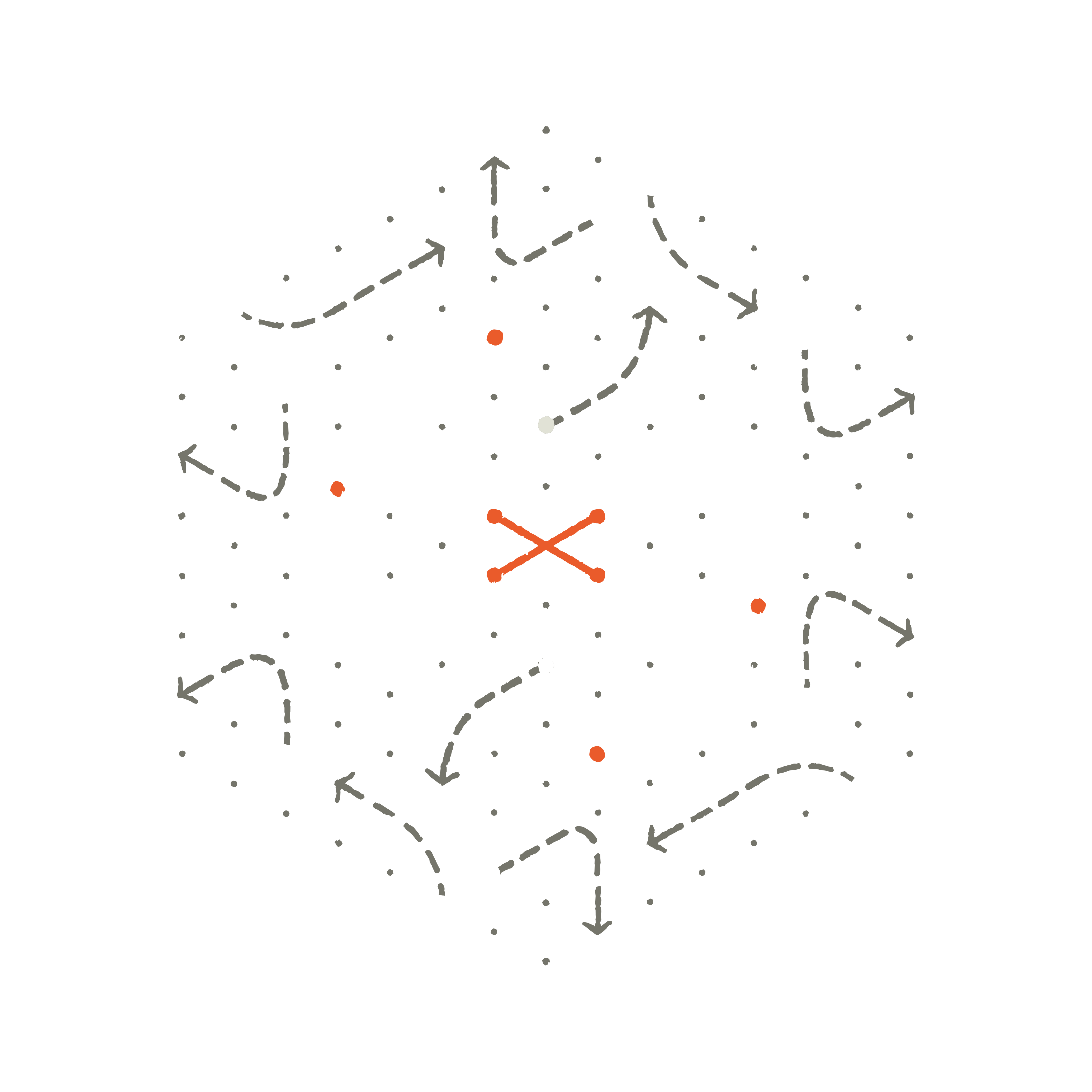
Every leader has a point of view about your business.
The problem? It's rarely the same point of view.
We surface those differences and distill what's true into an unassailable strategic narrative your whole team can stand behind. The process of wrestling through it together is what creates the alignment. The narrative is the proof that it exists.
Outcome: Conviction. Not a signed-off deck, a genuinely shared belief.

Your narrative is built, and your team believes it.
What happens next is how you lead the conversation.
We collaborate on the plan for sharing your narrative with the right people in the right way. Customers, investors, analysts, and partners don’t just hear from you, they start to think differently.
Outcome: The market starts to believe what your team already sees.

Shared belief isn't a destination. It's a discipline.
So we practice it together.
Markets shift. Competitors respond. The inertia of the past pulls you back. Left unattended, even the strongest story can fracture. That’s why we stay with you. Workshops, advisory sessions, and being in the room for those challenging conversations that keep your team locked in.
Outcome: Early momentum becomes durable advantage.
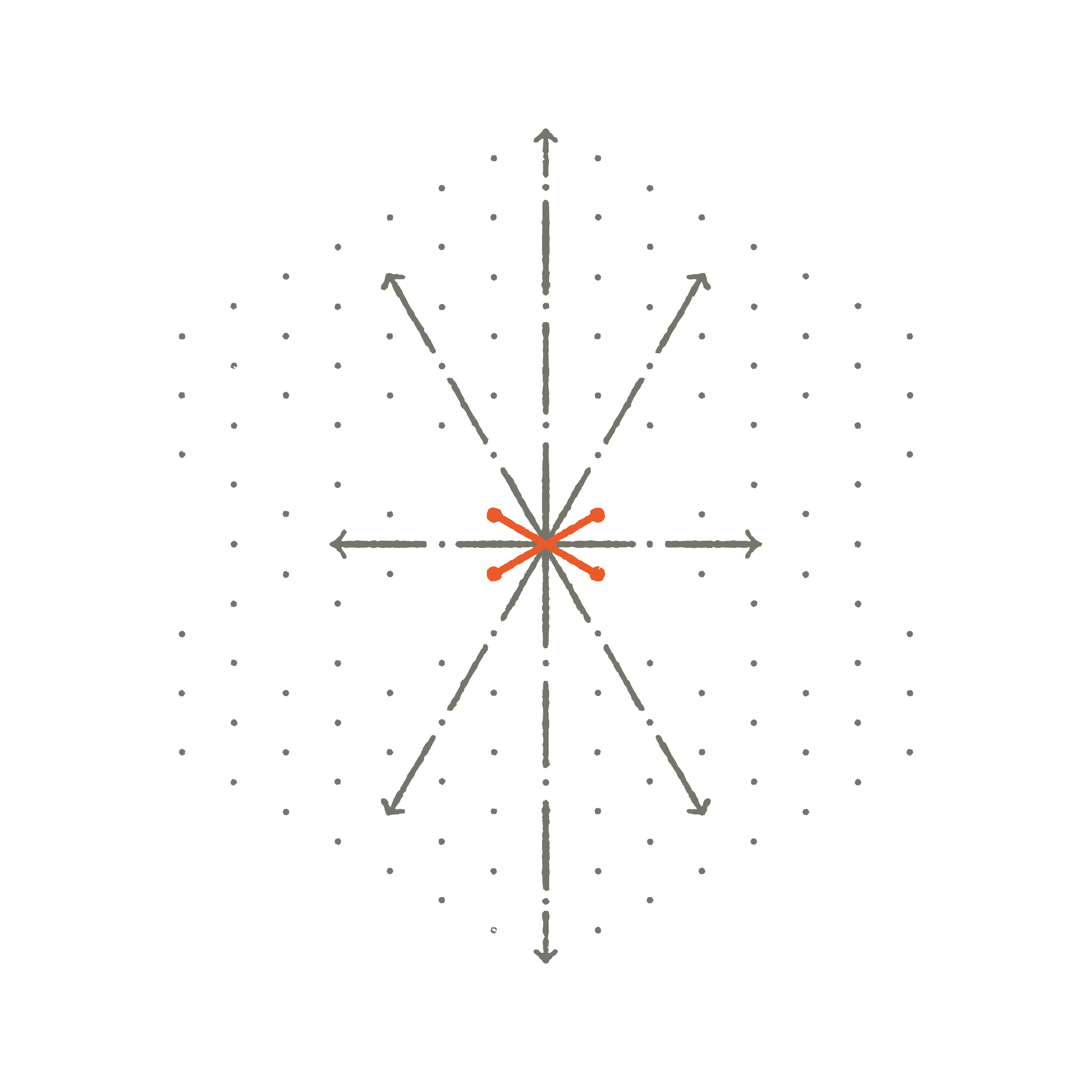
When the work lands, the shift is unmistakable.
Finally, every leader is moving toward the same purpose. As one client put it: "It's never been more clear what we are building and who we are building it for." That kind of conviction is rare.
It changes how the market sees you. It changes your future.

Who you are:
Who you aren't:

No pitch. Just a conversation about your situation and whether we're the right partners for each other.
We choose to take on clients not because of their industry or the size of their business, but because they have an ambition to push their industry forward.
Our best fits are executive teams experiencing a strategic inflection point: when the story and strategy that guided the past are no longer relevant.
In practice, most clients generate between $20M-$500M/year. They have real organizational challenges and the budget to do this work properly. That said, we are open to partnering with earlier-stage companies on a case-by-case basis.
We work with clients across the U.S., and occasionally beyond.
We could give you our own definition. Or just let one of our clients tell you:
"Before working with John, we were stalling on major decisions despite serious efforts to find our direction. John pushed back on our thinking and brought clarity, giving us the confidence we needed to finally move forward."
— Matt Kent, CEO, Q-PAC
I can’t help you build alignment and lead the conversation in your space if our work is constrained to a single department. To truly help you, I need access to your full executive team: the CEO, and the heads of marketing, product, sales, engineering, and anyone else who’s involved in making key decisions about the business.
All engagements begin with aligning your team on your strategy and your strategic narrative. That typically takes 6-12 weeks, depending on the complexity of your situation. Our goal is to move fast, because at strategic inflection points, speed to belief matters.
After that, most clients continue with a long-term advisory partnership.
That’s where our work shifts from “new thinking” to “let’s make it real.” Having someone who understands your situation deeply, but can still see it objectively, is an advantage your competitors won’t have. These partnerships are available for 12-month terms.
We don’t replace your marketing or PR agency; in fact, we love it when our clients have strong agency partners. Our job is to make those agency relationships more valuable.
The story and direction we develop together give your agencies the creative raw material they wish every client offered. And it sets them up to create the kind of campaigns that change what audiences believe and how they feel.
In fact, we’ve been brought in by agencies as a collaborative partner, and we regularly work alongside them. By helping them stay on course with your narrative, it’s one less thing your CMO has to worry about.
When strategic work fails to land, it can happen for a few reasons.
The most common one we see is when someone internal attempts the work. When it gets derailed, it’s because building shared belief across an organization rarely succeeds when the work is owned by a single department.
But strategy work can fail from the wrong engagement model with an external partner, too. Usually, a thoughtful strategy deck gets created and shared with much fanfare. But no one has skin in the game to bring it to life.
Flag & Frontier was built around outcomes, not deliverables. We build belief across your entire executive team, not just within the department that hired us. And we stay with you on the journey long after the initial work is complete.
Our initial diagnostic offerings are $5,000-$25,000. Full engagements range between $60,000–$125,000, depending on the scope of the problem we are solving and complexity of the work. Long-term advisory partnerships begin at $10,000/month.
When something feels off, and no one can quite name it, it’s often a sign that:
• Your competitive situation is shifting (dramatically).
• Executives have conflicting views about the future.
• You know you have something special, but no one can see it.
It might also show up as: a VC/PE round is requiring your company to become a bigger, badder, bolder version of itself; there’s an IPO on the horizon but there’s no real point of view to bake into your S-1; a competitor just leapfrogged you and you’re not going to settle for second place.
The Bearing Diagnostic is also a helpful tool to assess your situation. It’s a free assessment that will show where belief is aligned, where it's fractured, and what to do next. You can take it here: www.flagandfrontier.com/the-bearing-diagnostic